Povej prijatelju o tem izdelku:
Megacorp Matthew E Gladden


Megacorp
Matthew E Gladden
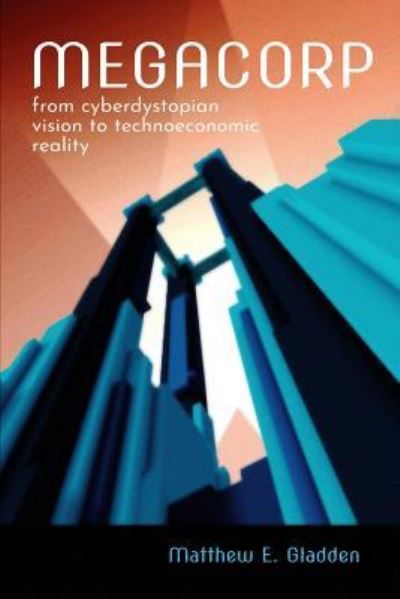
The image of the "megacorp" - the ruthless, sinister, high-tech global conglomerate that's grown so large and powerful that it has acquired the characteristics of a sovereign state - is one of the iconic elements of cyberpunk fiction. Such a megacorp maintains its own army, creates its own laws and currency, grants citizenship to employees and customers, and governs vast swaths of cyberspace and the physical world. If it allows traditional governments to survive in some vestigial form, it's only so they can handle those mundane tasks that the megacorp doesn't want to deal with itself. By these standards, contemporary companies like Amazon, Apple, Facebook, Google, Microsoft, ExxonMobil, and Walmart aren't (yet) "megacorps"; they're the playthings that megacorps gobble up to use for spare parts. This volume develops a comprehensive intellectual history of the megacorp. It locates forebears of the cyberpunk megacorp not only in earlier fictional works like ÄŒapek's R. U. R. (1921) and Von Harbou's Metropolis (1925) but in a string of real-world organizations ranging from the 17th-Century British and Dutch East India Companies to the Pullman Palace Car Company, the Ford Motor Company, and late 20th-Century Japanese keiretsu and South Korean chaebol - as well as in the nearly indestructible oligopolistic "megacorp" described in the pioneering theory of American economist Alfred Eichner. By investigating the nature of the cyberpunk megacorp as a political entity, commercial entity, producer and exploiter of futuristic technologies, and generator or manipulator of culture, differences are highlighted between the megacorps of "classical" cyberpunk and post-cyberpunk fiction. Classical cyberpunk megacorps - portrayed in novels like Gibson's Sprawl trilogy, films like RoboCop and Johnny Mnemonic, and games like Cyberpunk, Cyberspace, and Syndicate - are often ostentatiously malevolent and obsessed with short-term financial profits to the exclusion of all else; the over-the-top depictions of such companies serve a dramatic purpose and are not offered by their authors as serious futurological studies. On the other hand, the more nuanced and philosophically rich portrayals of megacorps in post-cyberpunk works like Shirow's manga The Ghost in the Shell reveal companies that are less overtly evil, possess a broader and more plausible range of long-term strategic goals, and coexist alongside conventional governments in a state of (begrudging) mutual respect. Yet other works like the game Shadowrun depict companies that combine elements of both classical cyberpunk and post-cyberpunk megacorps. Drawing on such analyses, the volume concludes by exploring how the idea of the post-cyberpunk megacorp anticipated a new type of real-world megacorp - the unfathomably large, fast, and complex "rhizocorp" - that's now being made possible through ongoing revolutions in the exploitation of robotics, AI, and the Internet of Things - and which threatens to become the dominant economic, political, and sociocultural power of our technologically posthumanized future world.
| Medij | Knjige Paperback Book (Knjiga z mehkimi platnicami in lepljenim hrbtom) |
| Izdano | 24. junija 2019 |
| ISBN13 | 9781944373306 |
| Založniki | Defragmenter Media |
| Strani | 322 |
| Dimenzije | 152 × 229 × 18 mm · 471 g |
| Jezik | Angleščina |
